Showing posts with label gamification. Show all posts

Sunday, March 29, 2015

Serious game _ Third world farmer


I played the serious game. According to Wikipedia, a serious game or applied game is a game designed for a primary purpose other than pure entertainment. The "serious" adjective is generally prepended to refer to products used by industries like defense, education, scientific exploration, health care, emergency management, city planning, engineering, and politics.

I chose Third World Farmer. It helps students experience some of the hardships of farming in a poor country. This game provide us the opportunity not only to know the English language but also to think about poor countries’ farming conditions including unexpected bank corruption, lack of basic necessities, disasters people would encounter or economic disadvantage. It means that this game is designed not just for language learning. Through this game, students are able to think about the poor countries and difficulty of farming besides the language learning.


I have played this game three times. The more a student plays games, the more he can get more points to buy utensils or farm plants. Clicking the person or items, students can see the details of the picture they clicked. The instructions and explanation are provided and students can buy necessities for their farm. Reading the instructions, students can learn vocabulary and expressions about farming and economy.


In addition, in the end, it provides ‘annual report’ including data such as plant they put or items they bought. The most interesting thing is that they also provide the information about some natural, social or political reason for the farming result this year such as bankruptcy, big fire and so on. Through this annual report, students can expand their vocabulary knowledge and be aware of some natural or social phenomena around the third farming country.


With regards to my learning objectives, I have chosen Michigan English Language Proficiency Standards, especially for reading and comprehension, R.5.2.c Restate facts and details of text. According to Kyle Mawer's task types, I can assess ‘story telling’ including narrating a game story or writing the narrative of a game. As an activity, I would like to have students play this game first, and then, have them to write what they did including the expression they’ve learned in this game. In addition, they are supposed to write about the reason why their farming was not successful reciting the reason presented in the ‘annual report.’ 

Friday, March 13, 2015

Goodgame Empire – Encouraging my students’ problem-solving ability by themselves


Goodgame Empire
Link


              I played this game three times. It took a relatively long time (over 30 minutes for a one time) because it is based on building a castle and manipulating the army. However, it is worth to spend time because it’s so interesting and arouse intrinsic motivation to finish the stage or complete the assigned task.

             In terms of language performance indicator, this game provides systematic level-up experience and specific instructions. This game aims to build the castle, collect the source to buy or upgrade my own property in the castle and take care of ‘my people’. In other words, learner can be the knight to protect my people’s safety and prosperity. The background of this game is the medieval times, and also it provides good back ground music. This back ground setting encourages learners to get involved in the situation as they seem to be there and gives a kind of sense of reality.
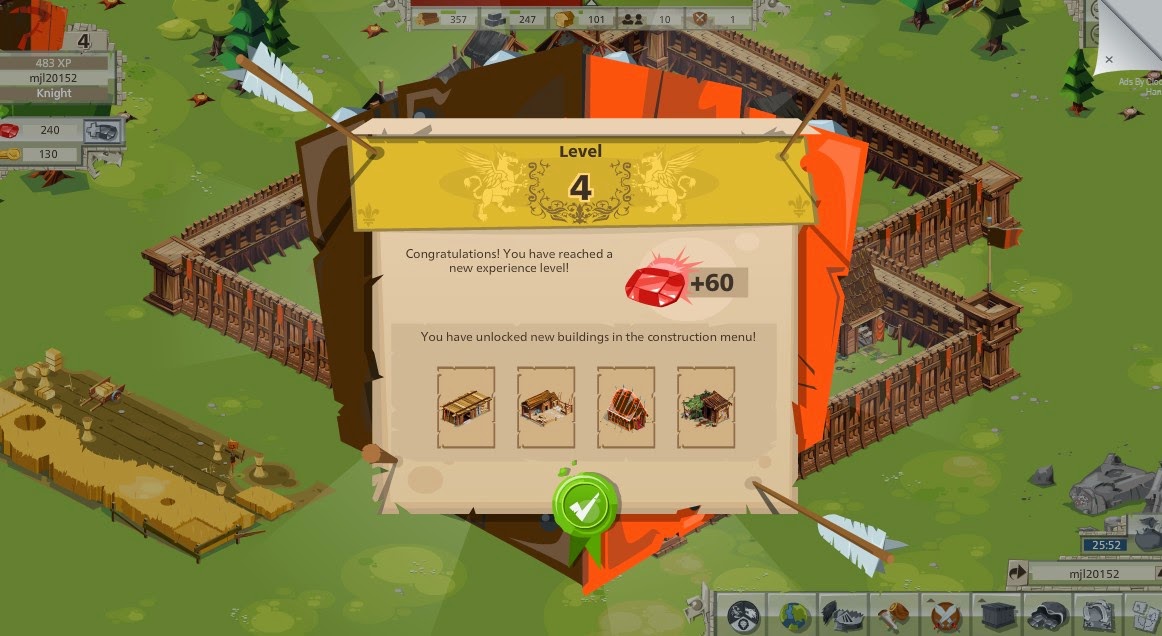


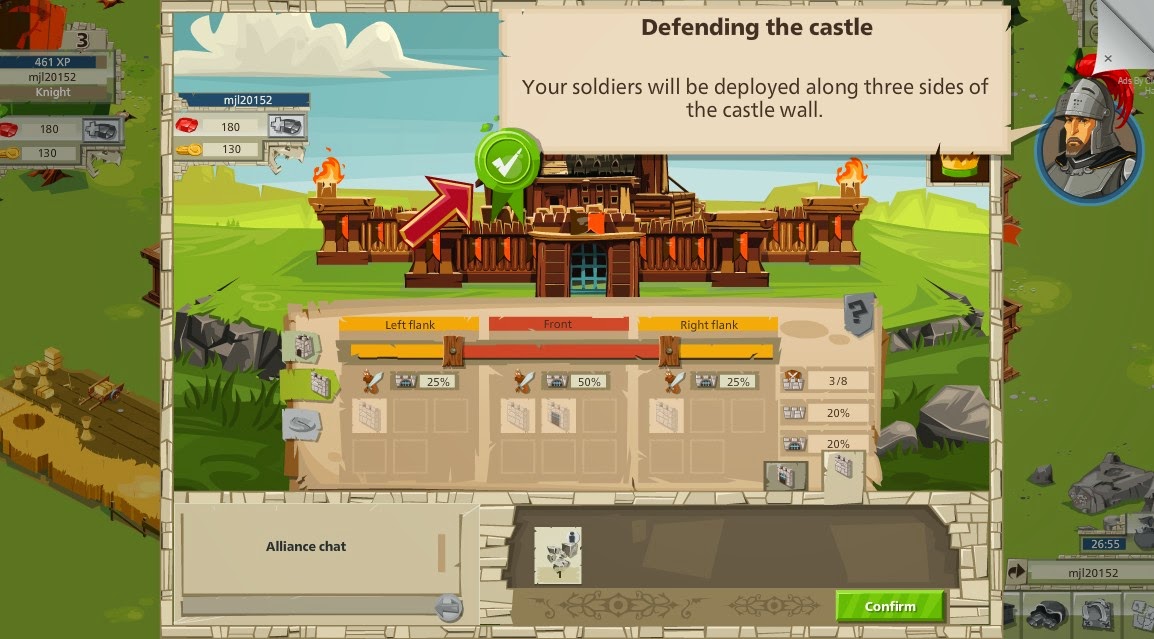
             As I mentioned above, learners do not have to be scary about being stagnant on their own level. According to the specific directions on each level, some ‘arrows’ let learners know what to do and how to do. At each stage, Wilhelm and General Sir. Ulrich assign the tasks and learners can do exactly what they have to do. And also they provide the specific instructions for each assignment. For example, when I was confused with how to collect my sources to upgrade my property in my castle (its name is Barracks), some arrows presented the area what I should click and Wilhelm gave me advice for upgrading my property. 


             I think the most important benefit of this game is making learners be accustomed to some new words and sentences given as instructions. All sentences not only are made of good sentences without any grammatical error but also have clear message to understand the task. It would be very helpful for learners because they can learn not only how to solve the problem in the game but also well-made sentences with the instructions. If learners have no idea about the word presented in the instructions, teacher just let them know or encourage them to think what they mean. Teacher’s role is limited in this game but the teacher can be a good interactor to student, helping them to solve the problem or accomplish the assigned task by themselves, with minimum external support.

             The game proceeds to collect some resources such as wood, coins, bread (food for people) and the knight (army). Learners have to concentrate on the screen because they can find those sources above of the people’s head (in the game) such as bread, coins and so on. When learners find those sources, they have to click on that and get that source. Collecting the sources, learners can buy the new property such as ‘stone quarry’ or ‘storehouse’ and they also can be used to enhance the castle’s barrier. After completing my task, even if it was a very small task, they praised and encouraged me to go to the next steps. Through every step, learners feel the sense of accomplishment, and even have a passion to complete the task in allotted time.


             If I show the ‘walk through’ to my students, it would be the following:

1.    Build your castle: First, follow the instructions and arrow.
2.    Then click the button. Then, set the building you want where you want to put.
3.    Collect the sources: Take Wilhelm and General Sir Ulrich’s advice.
4.    Keep your eyes on the above of the people’s head in my castle. Sometimes, one person have the picture of source over their head. When you see it, just click and get it.
5.    Then, use collected source to upgrade your castle and army.
6.    After, you upgrade your castle and army, your level also will go up.
7.    According to your level, you will get more challenging but interesting task.


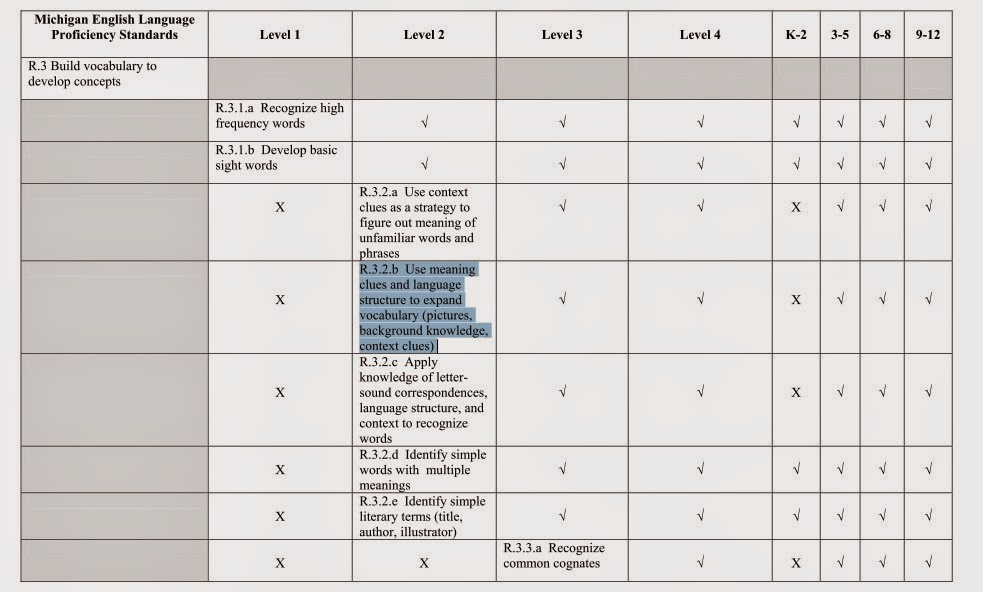
         Specifically, with regard to my specific learning objectives from Michigan English Language Proficiency Standards for K-12 Schools, especially R.3.2.b, students will be able to use meaning clues and language structure to expand vocabulary (pictures, background knowledge, context clues). 
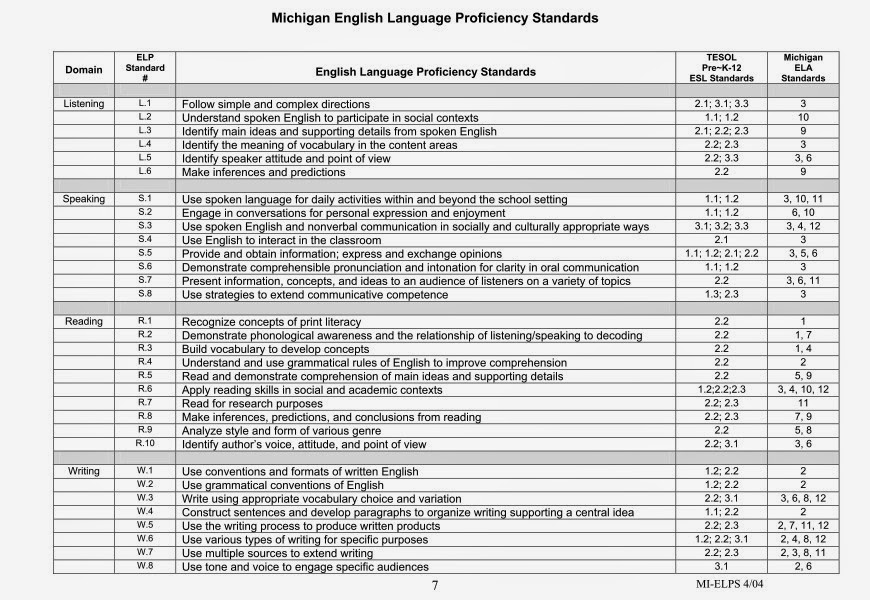


       To assess whether my learning objectives were accomplished or not, I can encourage my students to follow specific written directions or instructions to perform activities.

      I will give students the first quiz with a written form. I will use pictures, putting 10 pictures in it to match students’ word knowledge from this game. Pictures encourage students to remember the words more easily. For example, my students are bound to learn some words in this game such as ‘knight’, ‘coins’, ‘foods’, ‘employ’, ‘tools’ and so on. I will put 10 pictures of the words from the game. Students are supposed to match each word to each picture.

        Then, I will give students the second quiz with 10 questions. This quiz aims to check they can expand their word knowledge from the game. I will ask them to fill in the blank. In terms of ‘fill-in-the-blank questions’, I will ask one words from the game for each question. In other words, I will give a context/sentence with a blank and students have to choose only one word among 4 words choices and fill in the blank with the word. These are formed as multiple-choice typed questions.

       Through this activities, my students will be able to make sure what they’ve learn from the game and expand their language according to my learning objectives, Michigan English Language Proficiency Standards for K-12 Schools, especially R.3.2.b.


Thursday, March 12, 2015

The concept of gamification and a rational for using games for language learning


The concept of gamification

Gamification is the use of game thinking and game mechanics in non-game contexts to engage users in solving problems and increase users' self-contributions. According to the article < A Comparison of Computer Game and Language-Learning Task Design Using Flow Theory>, the author mentioned that learning is an active process which alternately involves skill-challenging experiences and reflective thinking.  

Educators realized that the interactive dynamic of games has the potential to benefit teaching and learning, and recent years have seen considerable activity surrounding the use of game mechanics in higher education. Educational gamification proposes the use of game-like rule systems, player experiences and cultural roles to shape learners’ behavior. To understand the potential of gamification, however, we must consider how these techniques can best be deployed in practice.


A rational for using games for language learning

According to the article <Gamification in Education: What , how, why bother?> by Joey J. Lee and Jessica Hammer, gamification, or the incorporation of game elements into non-game settings, provides an opportunity to help schools solve some difficult problems.  In addition, according to the article <Technology—“Just” Playing Games? A Look at the
Use of Digital Games for Language Learning B> by Julie. M. Sykes, digital game principles offer a way to overcome challenges of the language classroom that are difficult, if not impossible, via other means. Also, digital game design provide the new framework for overall understanding about the language learning and thinking. 

Learners can benefit from many aspects of playing games in their language learning. In terms of orienting their own learning goal, learners are able to set their learning goal independently as they do in the game situations. This orientating goal experience function as a motivator to proceed to their goal at the same time.

In addition, they can interact with a lot of characters in games or interlocutors in ‘real world’. They provide useful feedback to encourage learners to solve the problem in some situation. All these problem solving tasks are provided in  contextualized environment.

With regard to intrinsic motivation, as games for education are based on Problem based-learning,  learners are able to improve self-confidence and courage to overcome the difficulties by themselves when learners encounter them in game situation.  After experiencing the game situation, the learned ‘problem-solving ability’ applied to their language learning process. Learners are more likely to be motivated to solve the problem of language learning by himself or herself.